Art as Lifestyle
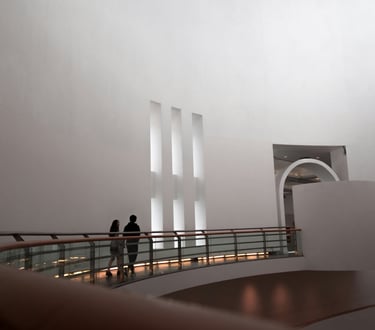
It happens quietly when someone stands a little longer in front of an artwork, not because they understand it fully, but because something in it feels familiar. A colour recalls a memory. A form mirrors a feeling. The artwork stops being an object and begins to feel like a presence.
This is where art leaves the gallery wall and enters life.
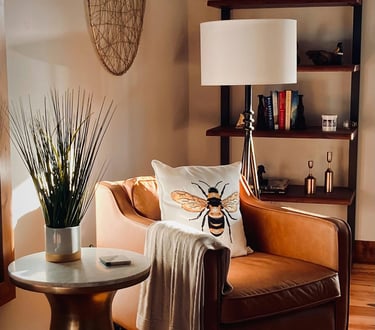
Art, at its most meaningful, has never existed in isolation. It has always shaped how we live, how we build our homes, tell our stories, mark our rituals, and understand beauty. To think of art as a lifestyle is not to reduce it to aesthetics, but to recognise its deeper role in shaping awareness.
Living With Art
To live with art is not about owning important works or knowing the right names. It is about allowing art to slow us down. An artwork seen every day begins to make a change, not physically, but emotionally. What once felt distant becomes intimate. What seemed decorative reveals thought. Over time, art becomes a mirror, reflecting our shifting moods, questions, and silences.
This relationship is deeply human. Art does not demand expertise; it asks for attention.
Beyond Display
In contemporary life, art often appears as a marker of taste, carefully placed, colour-coordinated, and harmonised with space. While this visual dialogue is important, art’s real power lies elsewhere. Art becomes meaningful when it interrupts comfort rather than confirms it. When it invites thought instead of simply fitting in. When it creates space for reflection rather than performance.
A thoughtful relationship with art allows room for ambiguity. It teaches us that not everything needs immediate clarity, and that some questions are meant to stay open.
Art and Everyday Awareness
Art as a lifestyle is also about how we look at the world beyond artworks.
It trains the eye to notice subtlety, the hand to respect material, and the mind to sit with complexity. It sharpens sensitivity to form, colour, rhythm, and absence. These skills extend naturally into daily life: the way we observe people, move through spaces, and respond to our surroundings.
In this sense, art is not separate from living; it is a practice of living attentively.
A Shared Human Language
Across cultures and histories, art has been a way for humans to communicate what words cannot fully hold: emotion, memory, longing, belief. Every artwork carries the trace of its maker’s time and inner world.
Engaging with art is an act of empathy. It is a reminder that behind every form lies a human gesture, a decision, a moment of vulnerability or clarity.
Art as lifestyle, then, is not about refinement alone; it is about connection.
A Way of Learning, A Way of Being
At Sapient Art Academy, we see art education as more than the acquisition of skills or knowledge. It is about cultivating a way of seeing, one that values depth over speed, curiosity over certainty, and process over perfection.
To invite art into one’s life is to allow space for thought, feeling, and growth. It is to recognise that art does not simply belong in studios or institutions, it belongs in everyday experience. Art, when lived with, becomes a quiet teacher. And perhaps that is its greatest role, not to impress, but to deepen how we live, notice, and understand the world around us.
Fin.